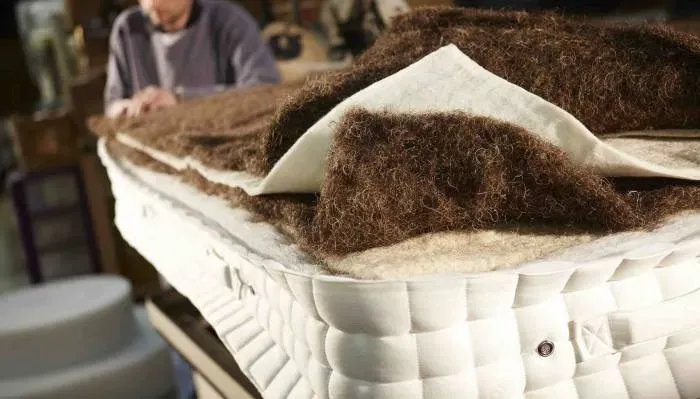
Look closely at the specification of a traditional mattress and you will often find a list of materials that sounds more like a tailor’s shop than a bed: wool, cotton, cashmere, silk, mohair, horsetail. These natural fillings sit between the spring unit and the cover, and they have a big say in how a mattress feels and how it behaves through the night.
If you are weighing up a natural mattress, it helps to understand what each filling actually does. Here is a plain guide to the most common ones.
In a sprung mattress, the springs provide the core support. The fillings, sometimes called upholstery layers, do several other jobs. They cushion you from the springs, add comfort, help regulate temperature and manage moisture from your body.
We all lose moisture overnight through sweat, and a mattress that cannot handle it well can feel clammy or stuffy. Natural fibres are generally valued for being breathable and for absorbing and releasing moisture more readily than many synthetic alternatives. That is a large part of their appeal.
They also behave differently over time. Natural fillings tend to settle slightly with use, which is normal and part of how a traditional mattress beds in. Regular turning and rotating helps keep them even.
Wool: The All-Rounder
Wool is the workhorse of natural mattress fillings, and with good reason. Its fibres are naturally crimped, which creates tiny air pockets that trap and release heat as needed. This helps wool keep you warm when the room is cold and cooler when you start to overheat.
Wool is also known for handling moisture well. It can absorb a fair amount of water vapour without feeling wet to the touch, then release it into the air. Many people find this keeps a bed feeling fresh.
Other points in wool’s favour include natural springiness and resilience, and a degree of natural flame resistance, which is one reason it has been used in bedding for so long. British wool is common in UK-made mattresses, and some makers use specific breeds for particular qualities.
Cotton: Soft, Breathable and Simple
Cotton is a familiar, comfortable filling that adds a soft, smooth layer. It is breathable and draws moisture away from the body, though it does not have quite the same temperature-regulating reputation as wool.
Cotton on its own can compress over time, so it is often blended with wool or other fibres to add bounce and longevity. You will frequently see it used as one layer in a combination of natural materials rather than the star of the show.
It is a good choice for people who want a natural mattress with a gentle, familiar feel and who may find some animal fibres less appealing.
Cashmere: Luxury and Softness
Cashmere comes from the fine undercoat of cashmere goats, and it is prized for its softness. In mattresses it is usually found in the top comfort layers of premium models, often blended with wool.
Cashmere fibres are very fine, which gives a luxurious, plush surface feel. Like wool, it is breathable and good at regulating temperature. It is, however, expensive, and in many mattresses it forms a relatively small proportion of the fillings. If a mattress advertises cashmere, it is worth checking how much is actually included.
For a closer look at how luxury fibres are layered together, the Natural Luxury model breakdown shows how cashmere, wool and other natural materials can be combined in a single mattress. It is a useful reference for seeing what these fillings look like in practice rather than just on a label.
Horsetail: The Traditional Spring Partner
Horsetail, or horsehair, is perhaps the most surprising filling for newcomers. It has been used in upholstery and mattresses for centuries and is still found in some high-end handmade beds.
The hair is naturally coarse and springy, and when it is curled it acts almost like a series of tiny springs. This gives a resilient, supportive layer that is very breathable, allowing air to move freely and helping heat and moisture escape.
Horsetail is usually placed lower down in the mattress, closer to the springs, rather than right at the surface. That way it adds support and airflow while softer fibres such as wool or cashmere sit on top for comfort.
Choosing the Right Combination
Most natural mattresses use a blend of fillings rather than a single material. When comparing options, think about:
- Temperature: if you sleep hot, look for generous amounts of wool and breathable layers such as horsetail.
- Feel: cashmere and silk add a softer, more luxurious surface; more wool and horsetail tend to feel firmer and springier.
- Allergies: wool is often considered less hospitable to dust mites than some materials, but anyone with specific allergies should check with the manufacturer.
- Budget: luxury fibres push prices up, and a well-made wool and cotton mattress can perform very well for less.
- Care: most natural mattresses need regular turning, so make sure you are happy to do this.
It is also worth asking how the fillings are held in place. Hand tufting keeps natural layers from shifting and is a common feature of quality traditional mattresses.
In Summary
Natural fillings each bring something different: wool for balance and temperature control, cotton for simple softness, cashmere for luxury, and horsetail for springy, breathable support. Understanding their roles makes it much easier to read a mattress specification and choose a blend that suits the way you sleep.