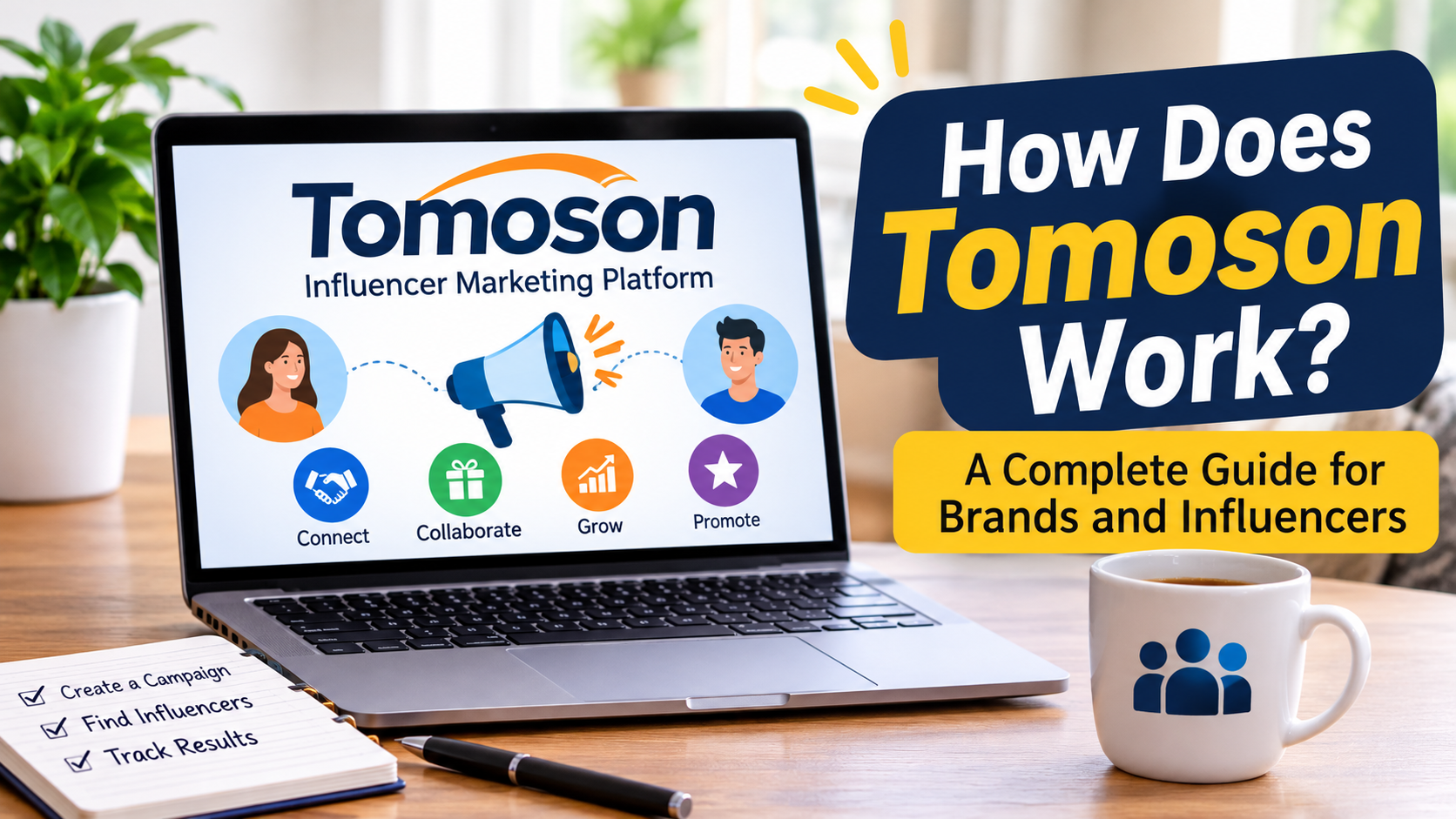
How does Tomoson work? Tomoson is known as an influencer marketing platform that connects businesses with bloggers, product reviewers, and social media creators. Its original purpose was to help brands promote products through collaborations with people who already had an audience. Instead of contacting influencers individually, businesses could use the platform to publish campaigns, receive applications, select suitable creators, and manage product promotions. Influencers, in return, could discover products, receive samples, and participate in promotional campaigns. However, Tomoson’s current availability is an important consideration before anyone attempts to create an account or launch a campaign.
What Is Tomoson?
Tomoson is an influencer marketing service originally designed to bring brands and content creators together. It focused particularly on product reviews, sponsored content, giveaways, and promotional collaborations.
For businesses, the platform offered a way to introduce products to relevant audiences without building an influencer network from scratch. For bloggers and social media creators, it provided opportunities to work with companies and discover products that matched their interests.
The basic idea was straightforward: a company offered a product or promotional opportunity, a creator applied to participate, and both parties agreed on the content and campaign requirements.
Tomoson was particularly associated with product-based influencer marketing, where receiving a free or discounted product could form part of the collaboration.
“Influencer marketing works best when a product reaches people who already have a genuine interest in its category.”
“A successful collaboration requires more than a promotional post. Clear expectations, honest opinions, and relevant audiences all matter.”
How Does Tomoson Work Step by Step?
The traditional Tomoson system followed a campaign-based process. Businesses created promotional opportunities, while influencers searched for suitable campaigns and submitted applications.
1. Brands create a campaign
The first step was for a business to register and prepare a campaign. The company provided information about its product and explained what it wanted to achieve.
A typical campaign could include:
- Product name and description.
- Product category and target audience.
- Type of content required.
- Influencer eligibility requirements.
- Campaign deadlines.
- Product samples, discounts, or agreed compensation.
Tomoson’s brand guidelines also allowed businesses to establish requirements that helped them control who could apply.
2. Influencers browse available opportunities
Content creators could explore campaigns that matched their interests, audience, and publishing platforms.
For example, a beauty blogger might look for skincare products, while a technology creator might prefer electronics or software campaigns.
Instead of accepting every opportunity, creators could review the campaign requirements and decide whether the product suited their audience.
3. Brands review applications
After influencers submitted applications, businesses could examine their profiles and relevant audience information.
Brands could consider factors such as:
- The creator’s subject area.
- Website or social media presence.
- Audience size and relevance.
- Previous content quality.
- Ability to meet campaign deadlines.
The business then selected the creators it wanted to work with. This approval process helped brands avoid collaborations that did not match their marketing objectives.
4. Products are delivered to selected creators
Once a creator was approved, the business arranged product delivery or provided an agreed promotional offer.
Tomoson’s original guidelines required brands running product-review campaigns to provide the product without charging the reviewer for the product or its shipping.
This arrangement allowed creators to experience the product before preparing their content. It also gave businesses an opportunity to introduce their products to audiences through independent creators.
5. Influencers publish their content
After receiving and testing the product, creators completed the agreed promotional work.
Depending on the campaign, this could involve:
- Writing a detailed product review.
- Publishing a blog article.
- Creating photographs or videos.
- Sharing promotional content on social media.
- Explaining product features through a tutorial.
The creator submitted the published content or its link through the campaign process. Brands could then check whether the agreed work had been completed.
6. Brands review completed campaigns
The final stage involved checking the creator’s submitted work.
Tomoson’s brand FAQ describes a dashboard where businesses could find completed campaign tasks and their associated review links.
This gave companies a central place to monitor campaign progress rather than relying entirely on separate email conversations.
Importantly, a product review was not supposed to be automatically positive. Tomoson’s guidelines explicitly supported honest opinions, including negative feedback.
How Does Tomoson Work for Influencers?
For influencers, Tomoson originally offered a way to discover promotional opportunities without approaching every company individually.
A blogger or content creator could find a campaign related to their niche, apply, and wait for the brand’s decision.
The process generally involved:
- Creating an influencer profile.
- Adding relevant websites and social media accounts.
- Searching for suitable product campaigns.
- Applying to opportunities that matched their interests.
- Waiting for brand approval.
- Receiving the product or promotional offer.
- Testing the product and creating the agreed content.
- Submitting the published work.
One attractive feature was the opportunity to receive products without purchasing them at their normal retail price.
However, influencers needed to understand the campaign conditions before accepting an offer. A free product does not mean there are no responsibilities. Deadlines, content requirements, disclosure obligations, and publication rules still matter.
How Does Tomoson Work for Businesses?
Businesses used Tomoson to simplify product promotion and find creators who could introduce their products to relevant audiences.
For a small company, building an influencer network independently can take considerable time. A campaign marketplace offered a more organized approach to discovering potential collaborators.
Here are some of the main benefits for businesses:
Finding relevant creators
Companies could identify influencers according to their interests, content categories, and audience characteristics.
This was particularly useful for businesses selling products in specific niches, such as beauty, fashion, home improvement, food, and technology.
Collecting product feedback
Businesses could receive feedback from people who had actually tried their products.
This information could help companies understand customer experiences, identify product weaknesses, and improve future marketing materials.
Creating promotional content
Influencer collaborations could generate photographs, videos, blog posts, and other forms of user-generated content.
Brands could use approved content in their marketing activities when they had the appropriate usage rights.
Managing campaign progress
The campaign dashboard and messaging features helped businesses communicate with creators and monitor completed assignments.
These features made it easier to organize several collaborations at the same time.
What Types of Campaigns Did Tomoson Support?
Tomoson was mainly associated with product promotion, but its campaign categories covered several types of marketing activities.
| Campaign type | How it worked |
|---|---|
| Product reviews | Creators tested products and shared their experiences |
| Sponsored content | Influencers published promotional material |
| Giveaways | Creators helped introduce products through promotional activities |
| Blog posts | Bloggers created detailed articles about products |
| Photography and videos | Creators produced visual promotional content |
| Product launches | Businesses introduced new products to relevant audiences |
| Tutorials | Influencers explained how to use products |
The platform’s brand FAQ also described campaigns involving physical products, ebooks, applications, services, events, and product launches.
Does Tomoson Cost Money?
Tomoson’s historical pricing structure distinguished between brands and influencers.
Influencers could register without paying a membership fee, while businesses were offered a free trial followed by monthly subscription charges.
The business costs could include more than the platform subscription. Companies also needed to consider product manufacturing costs, packaging, shipping, and any additional compensation offered to creators.
The historical brand FAQ described a free trial limited to one trial per business and a maximum of 10 campaigns. It also explained that monthly subscription costs depended on the number of influencers approved and sent products.
Important: These are descriptions of Tomoson’s published historical pricing arrangements, not a confirmation of currently available plans. Anyone considering payment should check whether registration and billing are actually operational before providing financial information.
Is Tomoson Still Working in 2026?
This is one of the most important questions for anyone researching the platform.
Tomoson’s traditional marketing model is well documented, but its current accessibility raises concerns.
A review of the platform’s public pages in October 2026 found that its login, registration, and account addresses redirected visitors to the main blog rather than displaying normal account access forms. Its campaign and pricing information remained visible, but that did not establish that users could actively participate in campaigns.
This distinction matters because a website can continue publishing articles and displaying old campaign information without operating its original marketplace.
As a result, it would be misleading to tell readers that they can definitely register, apply for products, or launch a new campaign through Tomoson today.
If you are considering using the service, check whether its registration system works, whether customer support responds, and whether campaign and payment functions are available. Avoid entering payment details until you can confirm that the service is operational.
Is Tomoson Safe to Use?
Safety depends on the service’s actual availability, account controls, payment arrangements, and the terms of individual campaigns.
Anyone considering an influencer marketing platform should follow a few basic precautions:
- Check that the platform provides working account access.
- Read the campaign terms before accepting an offer.
- Confirm who pays for product delivery.
- Understand when compensation becomes payable.
- Avoid publishing fabricated or misleading product reviews.
- Disclose free products and paid partnerships clearly.
- Check whether a brand has permission to reuse your photographs or videos.
One particularly important point concerns Amazon reviews. Tomoson’s historical terms prohibited brands from rewarding people for Amazon reviews. Providing a free product in exchange for a positive rating can violate marketplace review policies.
Honest opinions and transparent disclosures are essential to responsible influencer marketing.
What Are the Advantages and Disadvantages of Tomoson?
Like other influencer marketing marketplaces, Tomoson had strengths and limitations.
| Advantages | Disadvantages |
|---|---|
| Connected brands with creators | Current marketplace access is uncertain |
| Helped businesses discover niche influencers | Results depended on creator quality |
| Supported product-review campaigns | Businesses had product and shipping expenses |
| Offered campaign management tools | Required careful campaign monitoring |
| Allowed creators to discover products | Not every application received approval |
For smaller businesses, the original model offered a relatively straightforward way to experiment with influencer marketing. However, companies looking for advanced reporting, extensive audience analytics, and large-scale campaign management might need more comprehensive marketing software.
Alternatives to Tomoson
If you want to explore influencer marketing but cannot access Tomoson’s original marketplace, several other services are worth investigating.
- Afluencer: Connects brands with influencers for promotional partnerships.
- Intellifluence: Offers tools for influencer discovery and managing collaborations.
- Collabstr: Helps businesses find creators and purchase content or promotional services.
- GRIN: Provides influencer relationship and campaign management tools.
- Influenster: Focuses on product discovery, consumer feedback, and product sampling.
Each service has different features, eligibility requirements, and pricing arrangements. Check its current terms before choosing a platform.
Frequently Asked Questions
1. How does Tomoson work?
Tomoson traditionally worked as an influencer marketing marketplace. Brands created product campaigns, influencers applied for opportunities, and selected creators received products or promotional offers in exchange for agreed content.
2. Is Tomoson free for influencers?
Historically, influencers could join without paying a membership fee. However, they still had to meet campaign requirements and complete the agreed promotional work.
3. Do brands have to pay to use Tomoson?
Tomoson’s historical business model included a free trial followed by monthly subscription charges. Businesses also needed to cover product costs, shipping, and any additional influencer compensation.
4. Can you earn money through Tomoson?
The original platform offered opportunities involving products and promotional compensation. However, receiving free products was not the same as earning cash. Payment depended on the individual campaign agreement.
5. Is Tomoson still available in 2026?
Its public website remains accessible, but its traditional account and registration functions have shown signs of being unavailable. Recent checks found that these pages redirected visitors to its blog. Active marketplace access should not be assumed.
6. What can businesses use instead of Tomoson?
Businesses can investigate alternatives such as Afluencer, Intellifluence, Collabstr, and GRIN. The right choice depends on campaign budgets, preferred social networks, creator requirements, and marketing objectives.
Conclusion
Understanding how Tomoson works starts with its original purpose: connecting brands with influencers through product reviews, sponsored content, and promotional campaigns. Its campaign-based approach helped businesses discover creators while giving bloggers opportunities to collaborate with companies.
However, its current operational status requires caution. Although information about its original features and pricing remains publicly available, normal registration and login access have been problematic in 2026. Anyone interested in influencer marketing should confirm that the platform is genuinely operational before committing money or planning a campaign.
Papirmass Com: What the Website Offers and How It Has Changed